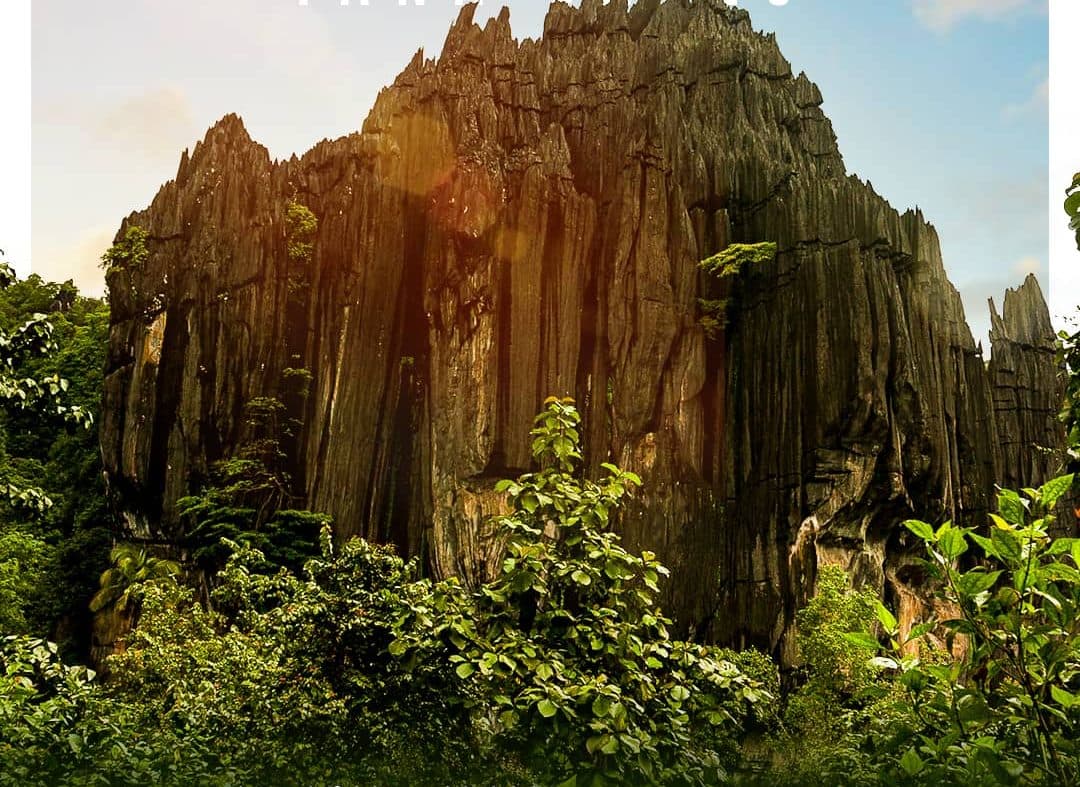
In the evergreen forests of Karnataka’s Western Ghats, Yana Caves is a spectacular destination where towering black limestone monoliths, ancient mythology, and scenic forest trails come together. Revered as both a sacred pilgrimage site and a geological wonder, it offers a unique experience for nature lovers, trekkers, photographers, and devotees alike.
Quick Facts
| Location | Yana village, Uttara Kannada district, Karnataka, India |
| Coordinates | 14.5270° N, 74.5596° E |
| Timings | 8:00 AM – 6:00 PM (Open all days) |
| Entry Fee | ~₹20–₹50 per person (Forest Department Eco-Development Fee; carry cash for parking & plastic deposit) |
| Parking | ₹20 for two-wheelers | ₹50 for four-wheelers |
| Best Time to Visit | October to March (Winter / post-monsoon) |
| Trek Difficulty | Moderate (500 m – 1 km via Mattighatta/Vibhooti side | 2.5 – 3 km via Sirsi side) |
| Nearest Railway Station | Kumta (~25–30 km) |
| Nearest Airport | Hubli Airport (~135 km) | Dabolim Airport, Goa (~140 km) |
| Yana Caves Distance from Bengaluru | ~445 km (approx. 8–9 hours by road) |
| Yana Caves Distance from Gokarna | ~52 km (approx. 1.5 hours by road) |
| Heritage Status | Geoheritage Site of National Importance (GSI, April 2026) |
Geological & Heritage Significance
Nestled within the evergreen forests of the Western Ghats, the rock formations at Yana Caves are among India’s most unique geological wonders. The twin monoliths – Bhairaveshwara Shikhara (120 m) and Mohini Shikhara (90 m)- are formed from rare black crystalline karst limestone, shaped over millions of years through sedimentation and tectonic activity. Their dramatic dark appearance and cave-like karst formations make Yana a rare natural landmark in peninsular India.
Recognising its geological importance, the Geological Survey of India declared Yana a Geoheritage Site of National Importance on 17 April 2026, placing it under formal conservation protection.
Mythology & Spiritual Significance
Yana Caves are deeply connected to the Hindu legend of Bhasmasura. According to mythology, the demon received a boon from Lord Shiva that allowed him to burn anyone by touching their head. To save Shiva, Lord Vishnu took the enchanting form of Mohini and tricked Bhasmasura into placing his hand on his own head, reducing himself to ashes. Devotees believe the black colour of the rocks and surrounding soil resulted from this event.
At the base of Bhairaveshwara Shikhara lies a sacred cave temple housing a self-manifested Shiva Linga and a bronze idol of Chandika Devi. The continuously dripping spring water over the Linga is considered sacred. Yana is also an important Bhairava Kshetra and attracts thousands of devotees during Maha Shivaratri for rituals and celebrations linked to Gokarna.
Trekking Routes & What to Expect
The trek to Yana Caves is a short yet scenic hike through the lush forests of the Western Ghats. Visitors can access Yana via two routes: the shorter, paved approach from the Mattighatta/Vibhooti side (Kumta approach) involves a ~500 m to 1 km walk (15–20 minutes), while the traditional route from the Sirsi side features a longer 2.5 to 3 km forest trail, followed by a 30–45 minute forest walk leading to the towering black rock formations.
From the base area, around 260 steps lead up to the monoliths, while additional steps inside Bhairaveshwara Shikhara allow visitors to explore the cave temple and surrounding rock passages. The shaded trail, rich biodiversity, and dramatic cave interiors make the experience both adventurous and spiritual.
Visitors are advised to wear sturdy trekking shoes, carry water, mosquito or leech protection, and use torches carefully inside the caves to avoid disturbing the resident bat colonies.
Best Time to Visit Yana Caves
The best time to visit is between October and March, when the weather is cool, the forest is lush after the monsoon, and trekking conditions are safer and more enjoyable. Early mornings are ideal for photography and avoiding crowds.
During the monsoon season (June to September), Yana becomes beautifully misty and vibrant, but trails can turn slippery, and leech activity increases significantly. Summer months (April and May) are hot and humid, making early morning visits preferable.
The site also attracts thousands of pilgrims during Maha Shivaratri, offering a unique cultural and spiritual atmosphere despite the heavy crowds.
How to Reach Yana Caves
By Air
The nearest airports to Yana Caves are Hubli Airport (around 135 km) and Dabolim Airport (around 140 km). Taxis are available from both airports to Yana, Kumta, or Gokarna.
By Rail
Kumta Railway Station is the nearest railway station, located about 25–30 km away. It is well-connected through the Konkan Railway network to Goa, Mangalore, Mumbai, and Bengaluru. Local taxis and buses are available from Kumta to Yana.
By Road
Yana is best reached by private vehicle or taxi through scenic Western Ghats roads.
- From Bengaluru: ~445 km (8–9 hours)
- From Gokarna: ~52 km (1.5 hours)
- From Sirsi: ~40–55 km
- From Kumta: ~25–30 km
Nearby Attractions
Several popular attractions can be combined with a visit to the Yana Caves:
- Vibhooti Waterfalls – A scenic waterfall surrounded by forest, around 8 km away.
- Gokarna – Famous for beaches like Om Beach and the Mahabaleshwara Temple.
- Mirjan Fort – A historic 16th-century fort near Kumta.
- Sirsi – Known for waterfalls, temples, and lush greenery.
- Unchalli Falls – One of Karnataka’s tallest and most beautiful waterfalls.
- Gudavi Bird Sanctuary – A peaceful wetland sanctuary ideal for birdwatching.
Where to Stay & Eat
There are no hotels inside the forest area of Yana Caves, so visitors usually stay in nearby towns like Gokarna, Kumta, or Sirsi. Gokarna offers beach resorts, homestays, and budget stays, while Kumta and Sirsi have affordable hotels and eco-stays surrounded by Western Ghats greenery.
Small kiosks near the trek entrance sell tea, snacks, and coconut water. For proper meals, visitors can dine at local Udupi-style restaurants in Kumta or Sirsi. Carrying water and light snacks for the trek is recommended.
Responsible & Sustainable Tourism
Yana Caves lie within the ecologically sensitive Western Ghats region, making responsible tourism essential.
- Carry back all plastic waste and follow the Forest Department’s plastic deposit system.
- Avoid touching or damaging the black limestone formations.
- Respect wildlife and do not feed animals.
- Remove footwear at the base counter before entering the cave passage (pradakshina path), and exercise caution on the cave’s naturally uneven, wet stones. Before entering the Yana cave temple, maintain silence inside.
- Use eco-friendly precautions against leeches, such as full shoes and long clothing.
- Visiting during weekdays or early mornings helps reduce crowd pressure on the site.
Conclusion
Yana Caves is a rare blend of natural beauty, geological significance, and spiritual heritage. Whether you’re trekking through the forest, exploring the iconic black rock formations, or visiting the Bhairaveshwara Cave Temple, a trip to Yana promises a memorable experience in the heart of the Western Ghats.
FAQ’s
How far is Yana Caves from Gokarna?
Yana Caves is approximately 52 km from Gokarna by road, a journey of roughly 1.5 hours via Kumta. The route passes through picturesque coastal and forest landscapes, and the drive itself is considered scenic. Hiring a private taxi or renting a motorcycle from Gokarna is the most convenient option, as direct public bus services are infrequent.
How far is Yana Caves from Bangalore?
Yana Caves is approximately 445 km from Bengaluru, making it an approximately 8–9 hour drive by road via the NH48 and NH66 (Hassan–Mangalore corridor) or via Shimoga and Sirsi.
What is the best time to visit the Yana Caves?
The best time to visit Yana Caves is between October and March, when the weather is cool and pleasant, the forests are verdant from the rains, and trek conditions are safe. November to February are peak months offering the most comfortable experience.
Is there a temple at Yana Caves?
Yes. The Bhairaveshwara Cave Temple is located at the base of the larger monolith, Bhairaveshwara Shikhara. It is dedicated to Lord Shiva and houses a naturally formed (Swayambhu) Shiva Linga, over which spring water drips continuously from the cave roof, an occurrence considered deeply sacred.
How difficult is the Yana Caves trek?
The Yana Caves trek is classified as moderate. The forest trail from the parking area to the base of the monoliths is 2.5 km to 3 km, depending on the route taken, and takes 30–45 minutes one way. From the base, approximately 260 steps lead up to the rock face, and an additional 300–400 steps navigate the interior of the cave. The entire circuit, including time inside the cave and at the temple, typically takes 2–3 hours. The trail is well-marked and manageable for most adults with reasonable fitness. It is not recommended for very young children or elderly visitors requiring assistance, particularly the steeper cave section.
What are the Yana Caves timings and entry fee?
Yana Caves is open daily from 8:00 AM to 6:00 PM. The Forest Department collects a nominal Eco-Development fee of approximately ₹20 to ₹50 per person at the forest checkpoint.
Why are the Yana rocks black?
The black colour of the Yana rock formations is a result of their geological composition. The monoliths are made of crystalline karst limestone rich in carbon, which has darkened over millions of years through sedimentation, tectonic pressure, and mineral absorption.
Is Yana Caves a UNESCO or government-protected site?
Yana Caves is not currently a UNESCO World Heritage Site. However, on 17 April 2026, the Geological Survey of India (GSI) officially declared Yana Caves a Geoheritage Site of National Importance, a significant formal recognition that brings government protection and conservation focus to the site.
Are there guides available at Yana Caves?
Local guides and temple priests are generally available at the site, particularly on weekends and festival days.