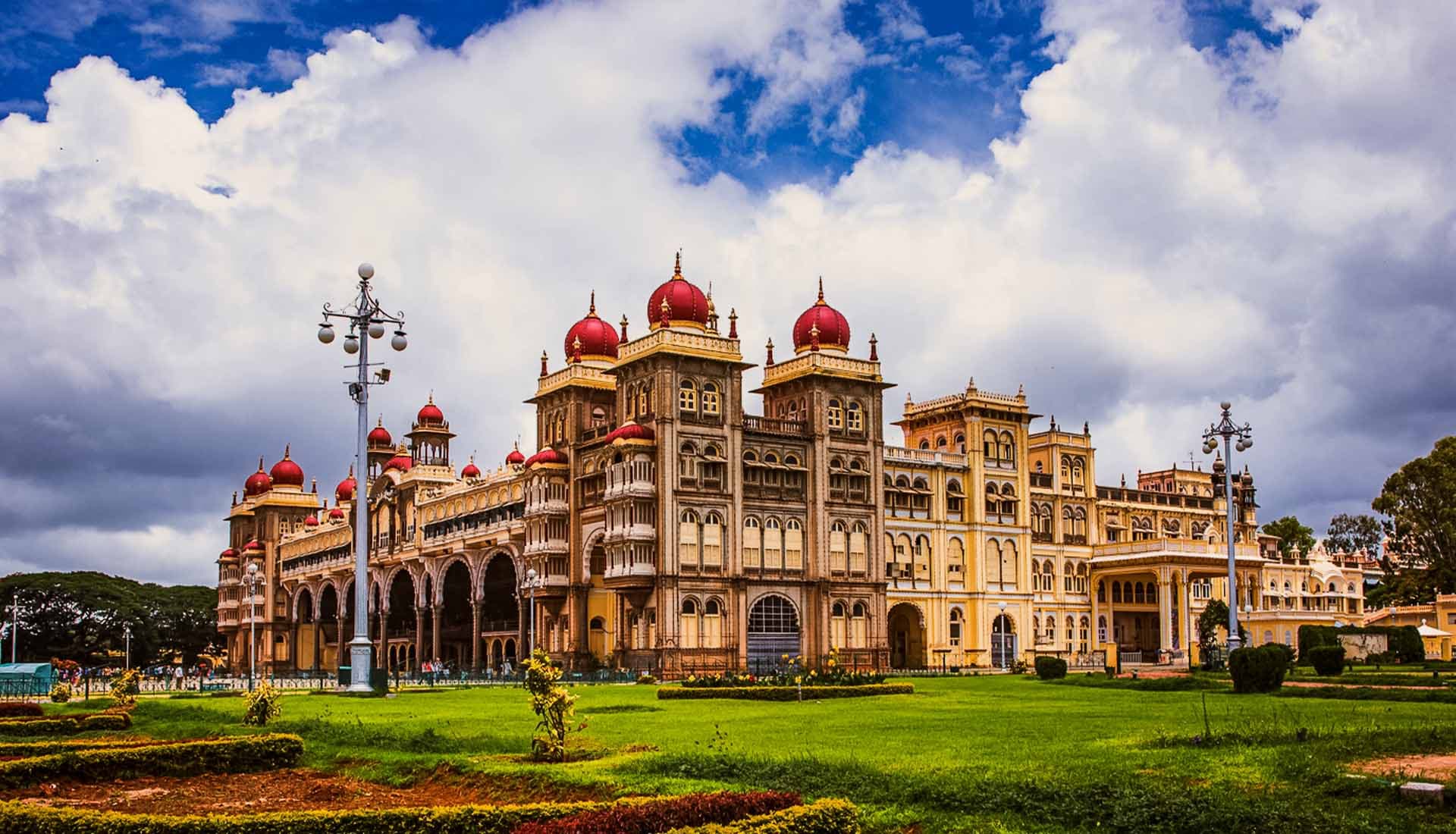
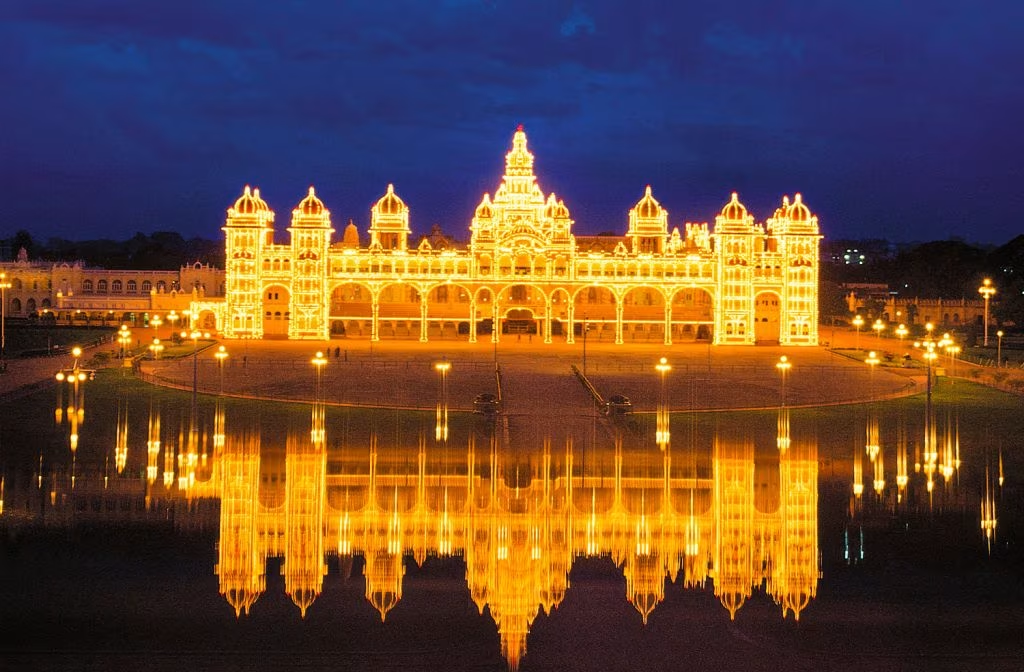
Every evening, as the sun dips behind the Chamundi Hills, nearly a hundred thousand bulbs flicker to life on the domes and arches of Mysore Palace. For a few minutes, the sky above Mysuru glows gold, and the city’s royal past feels close enough to touch. This single building draws more visitors than almost any other monument in India after the Taj Mahal, and once you stand before it, you understand why.
This guide walks through everything worth knowing before you go: the fire that forced the palace to be rebuilt, the architectural styles stitched into every arch and dome, the treasures waiting inside, and the practical details that will make your visit easier, from ticket prices to the best season to travel.
Quick Info
| Also Known As | Amba Vilas Palace |
| Location | Old Fort, Sayyaji Rao Road, Mysuru, Karnataka 570001 |
| Built By | Maharaja Krishnaraja Wadiyar IV, designed by architect Henry Irwin |
| Construction Period | 1897 to 1912, with an extension added in 1940 |
| Architectural Style | Indo-Saracenic, blending Hindu, Islamic, Rajput and Gothic elements |
| Visiting Hours | 10:00 AM to 5:30 PM, daily (last entry 5:00 PM) |
| Illumination Timings | 7:00 PM to 8:00 PM on Sundays and public holidays, |
| Sound and Light Show Schedule | Monday to Wednesday: 7:00 PM – 8:00 PM (Kannada)Thursday to Saturday: 7:00 PM – 8:00 PM (English) |
| Entry Fee | ₹120 per head |
| Nearest Landmarks | Chamundi Hills, Devaraja Market, Mysuru Zoo |
| Best Time to Visit | October, during the ten-day Mysuru Dasara festival |
A Palace Built and Rebuilt Across Centuries
Mysore Palace has never had an easy history. Wooden structures stood on this same ground as far back as the 14th century, when the Wadiyar dynasty first made Mysuru their seat of power. Fire, lightning, and invasion destroyed those early palaces more than once. Tipu Sultan tore down and rebuilt the complex in the late 18th century, and later Wadiyar rulers restored it after his reign ended.
The building that stands today owes its shape to a disaster. In 1897, a fire broke out during a royal wedding and burned the wooden palace to the ground. Only one photograph of that earlier structure survives. Maharani Vani Vilas Sannidhana, acting as regent for the young Krishnaraja Wadiyar IV, commissioned British architect Henry Irwin to design a permanent stone replacement. Construction began almost immediately and continued for fifteen years, wrapping up in 1912 at a cost of about 42 lakh rupees, a vast sum for its time.
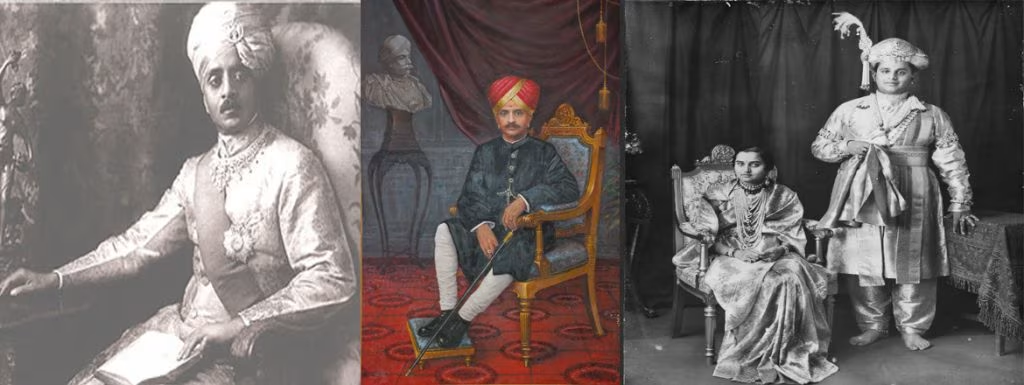
The palace grew once more in 1940, when new wings and a durbar hall extension were added. What you walk through today is essentially this early-20th-century structure, sitting on the footprint of palaces that came centuries before it.
Indo-Saracenic Architecture: Where Styles Collide
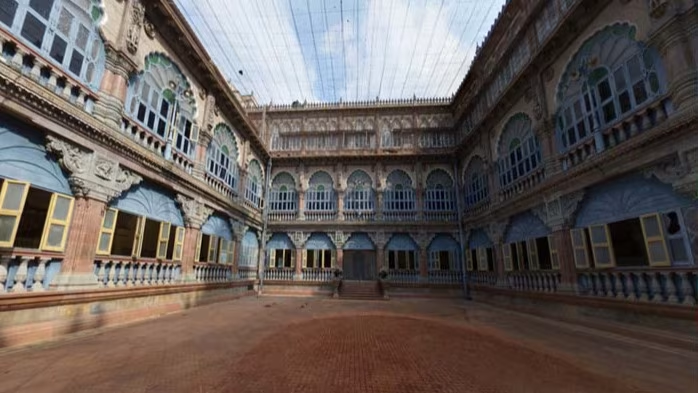
Henry Irwin did not design a palace in a single style. He blended Hindu temple motifs, Islamic domes and arches, Rajput balconies and Gothic detailing into one building, a mix historians call Indo-Saracenic architecture. The result feels unlike any single tradition, and that is exactly the point.
The Structure and Materials
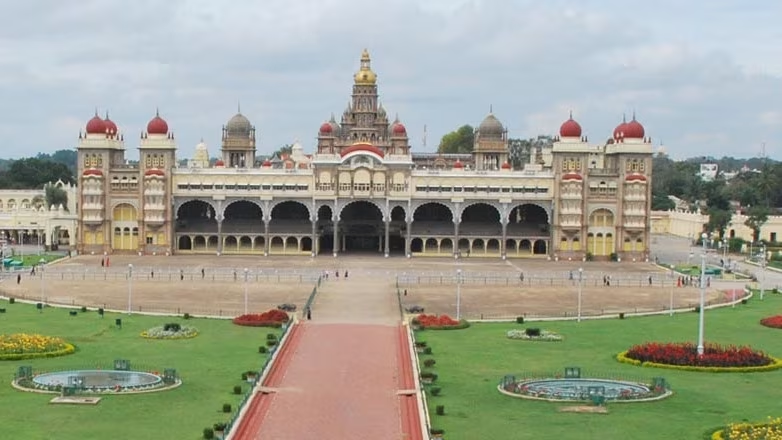
The palace rises three storeys and covers roughly 245 feet in length. Builders used fine grey granite for the main structure and deep pink marble for the domes, a combination that gives the palace its distinctive rosy glow at sunset. A five-storey tower rises 145 feet above the main building, capped with a gilded dome that architects modelled loosely on St Paul’s Cathedral in London.
Domes, Arches and Details
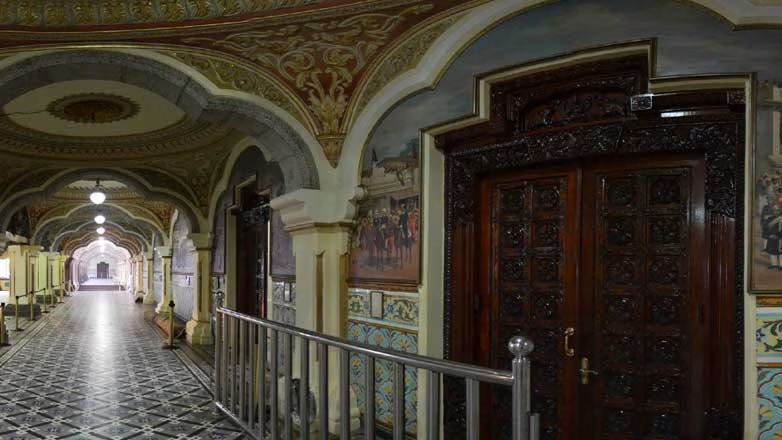
Look closely, and you will spot dozens of smaller domes, arched colonnades, filigreed screens and richly carved wooden doors scattered across the facade. Bay windows and open pavilions break up the stone walls, letting light and air move through the building even in Mysuru’s warm afternoons. The palace complex sits on 72 acres of manicured gardens, fountains and pathways, giving the grand structure room to breathe.
Craftsmanship That Rewards a Slow Look
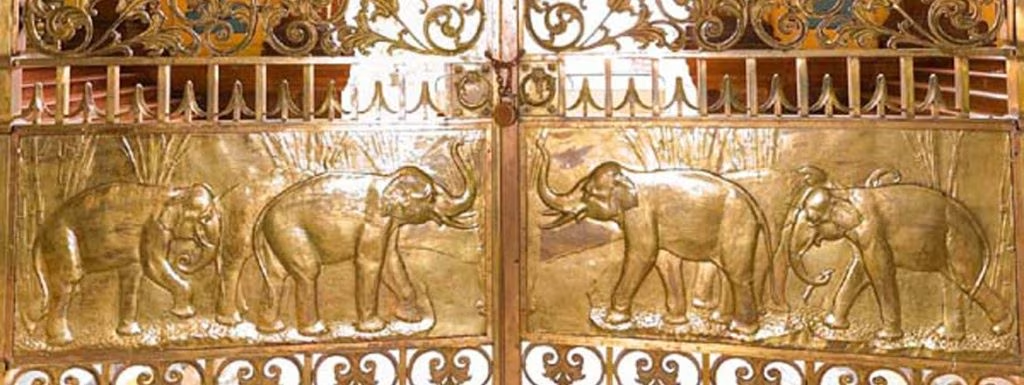
Much of what makes the palace special sits in details easy to miss on a quick walk-through. Sculptors carved elephants, lotus flowers, and mythological figures into the stone facade. Bronze statues of Hindu deities flank several entrances, while ornamental brackets and cornices repeat motifs found in South Indian temple architecture. Together, these details turn a single building into something closer to a museum of craftsmanship spanning several traditions at once.
Stepping Inside: The Palace Interiors
Visitors must remove their shoes before entering, and photography inside is not permitted, rules that keep the interiors remarkably well preserved. Once inside, the scale and colour of the rooms are hard to describe secondhand.
The Durbar Hall
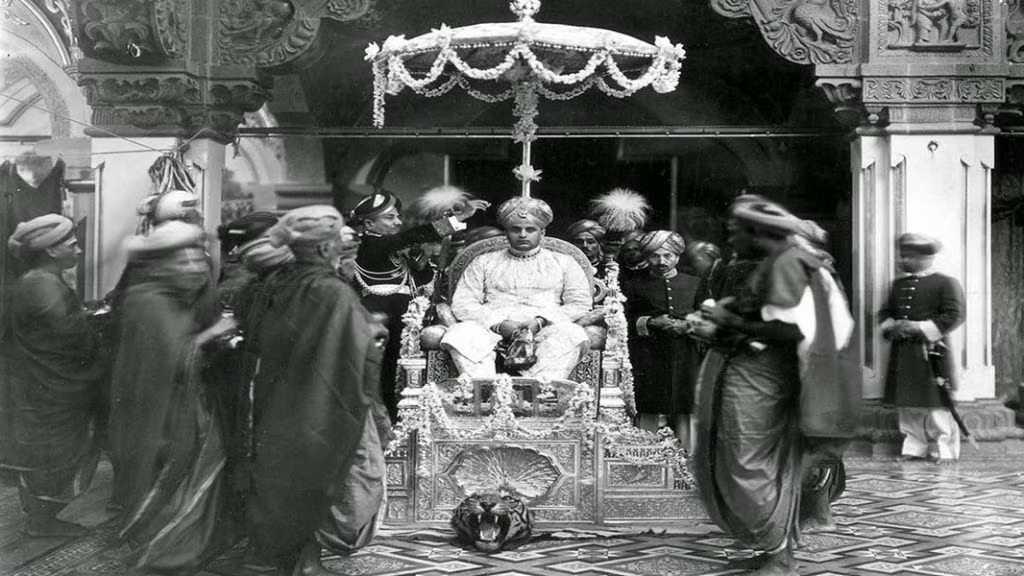
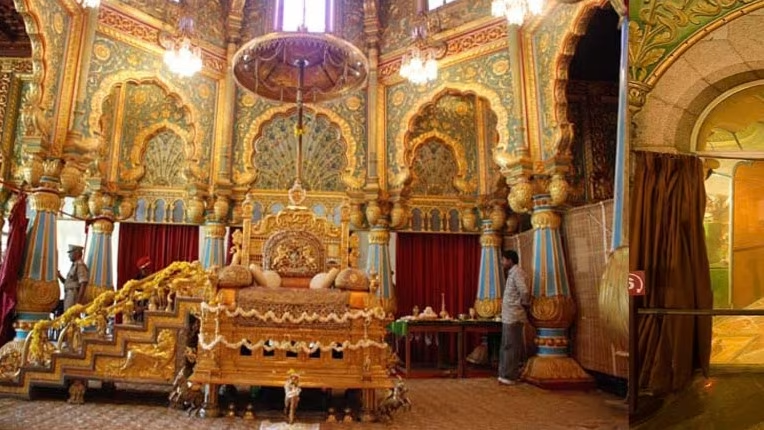
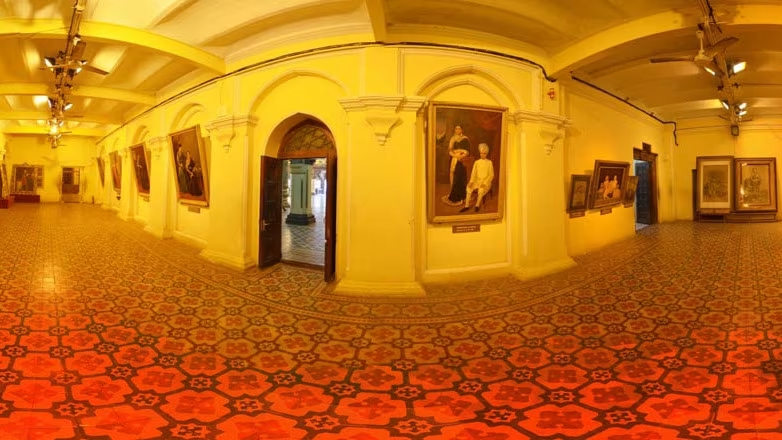
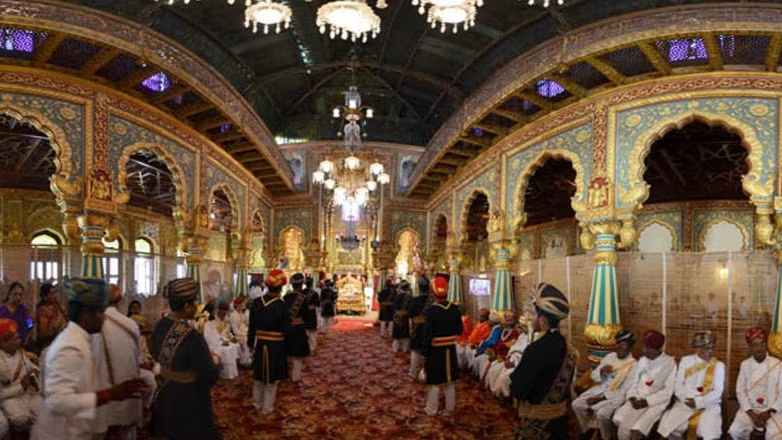
The Durbar Hall was where the Maharaja held court, and it remains the most photographed room in the palace, at least by memory. Sculpted pillars support a ceiling painted in gold, while the floor gleams with polished granite. Portraits of former rulers line the walls, watching over the empty throne room.
Kalyana Mantapa, the Marriage Pavilion
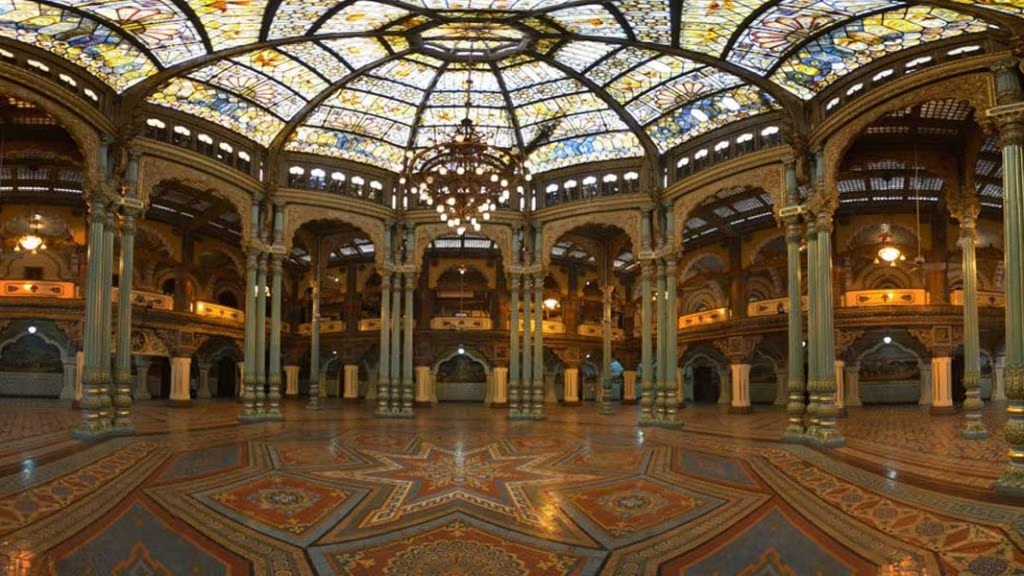
The octagonal Kalyana Mantapa hosted royal weddings and ceremonies. Its stained-glass ceiling, imported from Glasgow, scatters coloured light across a floor tiled in intricate geometric patterns. Peacock motifs, a recurring symbol in Wadiyar iconography, appear throughout the glasswork.
Ambavilasa and the Public Durbar Hall
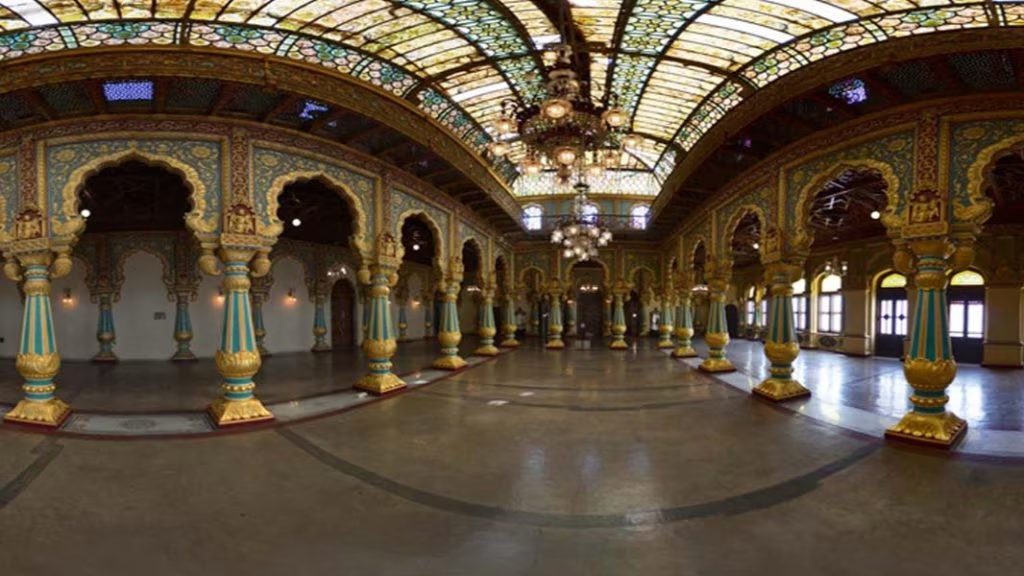
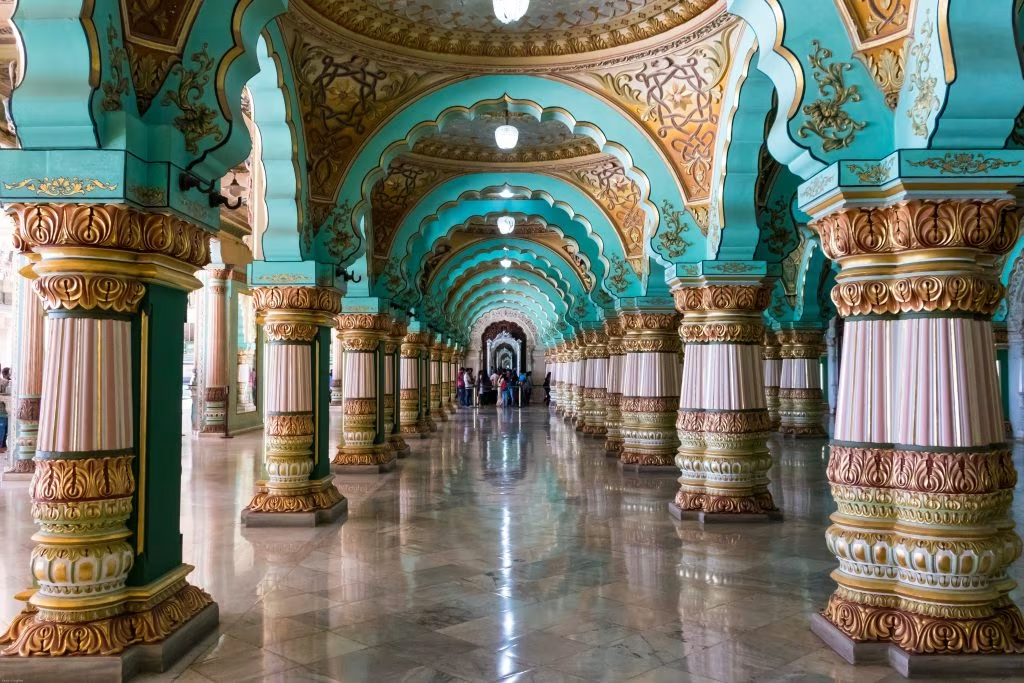
The Ambavilasa Hall, once the Maharaja’s private audience chamber, features doors inlaid with ivory and silver. Upstairs, the Public Durbar Hall opens onto a colonnade with sweeping views of the palace gardens, its ceiling decorated with paintings depicting Dasara processions from a century ago.
The Golden Howdah and Dasara Celebrations
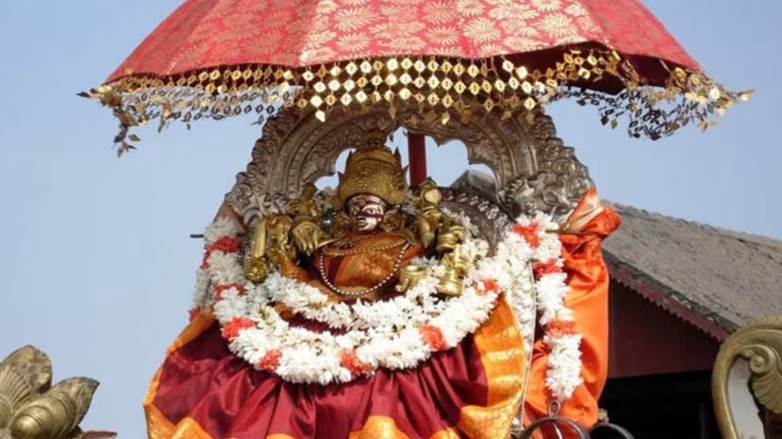
Among the palace’s treasures sits a Golden Howdah (Chinnada Ambari) weighs 750 kg (approx. 1,650 lbs). It is made of 80 kg of pure gold sheet encrusting a wooden frame with intricate carvings, once used to carry the Maharaja atop a royal elephant. It still plays a central role every year during Dasara, when it carries an idol of Goddess Chamundeshwari through the streets of Mysuru in a grand procession called the Jumbo Savari.

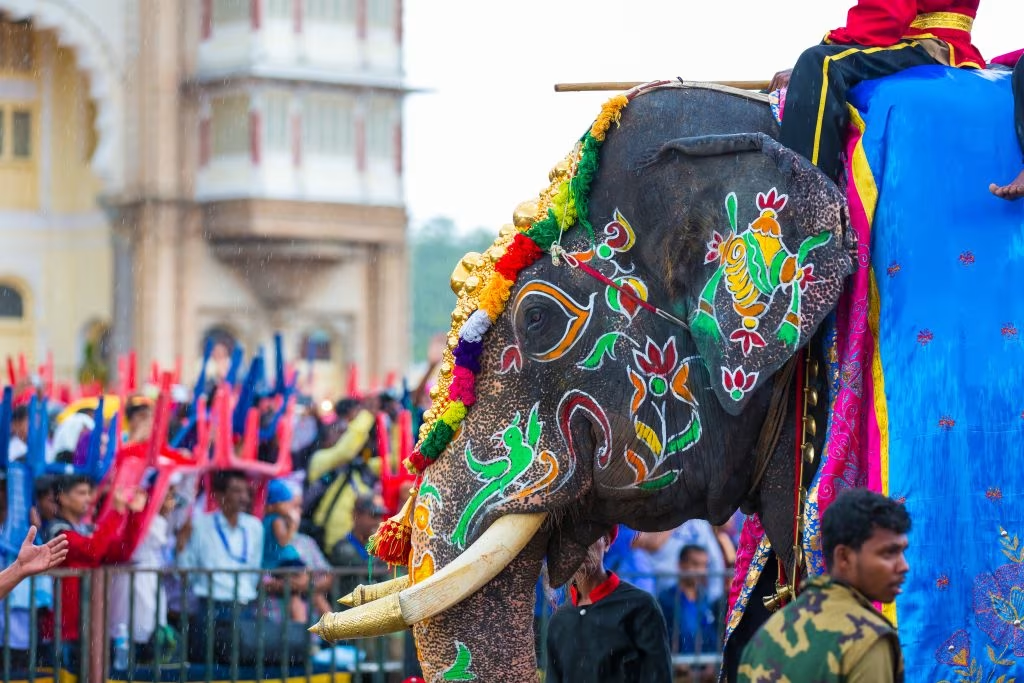
Dasara transforms the palace completely. For ten days in September or October, 97,000 electric bulbs outline every arch, dome and pillar, and the illumination runs for two hours each evening instead of the usual forty-five minutes. Cultural performances, exhibitions and a torchlight parade fill the palace grounds, drawing visitors from across the world. If you can time a trip around this festival, you will see Mysore Palace at its absolute best.
On regular Sundays and government holidays, the palace still lights up between 7:00 PM and 8:00 PM, a smaller but still striking preview of the Dasara spectacle.
Little-Known Facts About Mysore Palace
A few details tend to surprise first-time visitors, and they add texture to what could otherwise feel like a standard sightseeing stop.
- The palace has seven entrances in total, though the public can only use two of them: the Varaha Gate and the Ambavilasa Gate.
- A small red light sits atop the central dome. Palace staff switch it on fifteen minutes before illumination to synchronise the bulbs across four separate control stations, then switch it off once the display settles into rhythm.
- Illumination at Mysore Palace is not a modern addition. The first recorded attempt to light up the building dates back to 1878, to mark the wedding of Chamarajendra Wadiyar.
- Only a single surviving photograph shows what the original wooden palace looked like before the 1897 fire.
- The current royal family still holds ceremonial ties to the palace, and members occasionally appear during Dasara rituals, even though the Government of Karnataka now manages the property.
- Mysuru is nicknamed the City of Palaces, and Mysore Palace is only one of seven palaces in the city, though it remains by far the most visited.
Twelve Temples Within the Palace Grounds
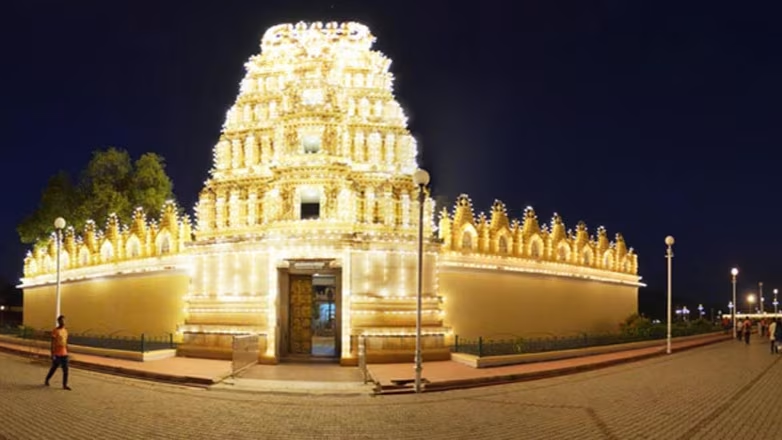
Beyond the main building, the palace complex holds twelve temples, some older than the palace itself. The Sri Shweta Varahaswamy Temple, the Someshvara Temple dedicated to Shiva, and the Lakshmiramana Temple dedicated to Vishnu are among the oldest, with roots tracing back to the 14th century. Wandering these smaller shrines after touring the main palace offers a quieter, more contemplative side of the visit.
Planning Your Visit
The palace opens daily from 10:00 AM to 5:30 PM, with the last entry allowed at 5:00 PM. Indian nationals pay around ₹70 for entry, while foreign visitors pay ₹200. Children usually receive a discounted rate. A separate sound and light show runs most evenings, alternating between Kannada and English narration, and ticket prices for the show sit slightly above the daytime entry fee.
A few practical notes make the visit smoother. Shoes come off before you step inside, so wear something easy to slip on and off. Large bags and backpacks are not allowed inside, though the palace provides cloth bags for small essentials. Cameras and phones must stay away during the interior walk-through, so save your photography for the exterior and gardens, where it is freely allowed.
How to Reach Mysore Palace
The palace sits in the heart of Mysuru city, close to the City Bus Stand and well connected by auto-rickshaws and cabs from every part of town. Mysuru Junction railway station lies about two kilometres away, and Mysore Airport is roughly ten kilometres from the palace. Travellers from Bengaluru can drive in around three hours along the Bengaluru-Mysuru Expressway, or take frequent trains and buses between the two cities.
By Air
Mysore Airport handles limited domestic flights, so most travellers fly into Kempegowda International Airport in Bengaluru and continue by road, a roughly three-and-a-half-hour journey.
By Train
Mysuru Junction connects well with Bengaluru, Chennai and other major South Indian cities, with several trains running each day. From the station, the palace is a short and inexpensive auto-rickshaw ride away.
By Road
State-run and private buses connect Mysuru with Bengaluru, Coimbatore and other nearby cities throughout the day. Self-drive travellers will find the Bengaluru-Mysuru Expressway a smooth, well-marked route with clear signage toward the Old Fort area.
Best Time to Visit
October usually brings the Mysuru Dasara festival, making it the most rewarding month to visit despite the larger crowds. For a quieter experience with pleasant weather, aim for the cooler months between November and February. Weekday mornings, right after the palace opens, tend to be the calmest time to explore without long queues. You can book your tickets here.
Conclusion
Mysore Palace is more than a monument to admire from a distance. It is a building that survived fire, war, and reconstruction, only to emerge as one of the finest examples of Indo-Saracenic architecture in India. Every hall, dome and carved door carries a piece of the Wadiyar dynasty’s five-century story, and the nightly illumination still turns an ordinary evening into something memorable. Whether you visit during the dazzling ten days of Dasara or on a quiet weekday morning, Mysore Palace rewards anyone willing to look closely at its history and its craftsmanship.
FAQ’s
1. Who built Mysore Palace?
Maharaja Krishnaraja Wadiyar IV commissioned the present structure after a fire destroyed the earlier wooden palace in 1897. British architect Henry Irwin designed the building, which took fifteen years to complete.
2. What architectural style is Mysore Palace built in?
The palace follows the Indo-Saracenic style, combining Hindu, Islamic, Rajput, and Gothic architectural elements in one structure.
3. What are the entry fees and timings?
The palace is open from 10:00 AM to 5:30 PM daily and the entry fee is ₹120 per head
4. When does Mysore Palace get illuminated?
97,000 electric bulbs light up the palace between 7:00 PM and 8:00 PM on Sundays and public holidays. During Dasara, the illumination extends to two hours each night.
5. Can I take photographs inside the palace?
No, photography and videography are not allowed inside the palace. You can photograph the exterior, gardens, and grounds freely.
6. How much time should I set aside for a visit?
Plan for about two to three hours to cover the main palace, the temples within the complex, and the gardens without feeling rushed.